Free, and nothing to sign up for
The seven steps
This is the whole practice from Effort-less Self-Care, free to use here. It takes a few minutes. There is nothing to fix and no way to do it wrong: you sit, you notice what your body is doing, and you write down what you find, or you do not. Anything you type stays in this browser on this device and is never sent anywhere, including to Reem.
All seven steps are laid out below. Turn on JavaScript for the guided version, with the breathing guide, the timers and saved answers.
Step 1 of 7
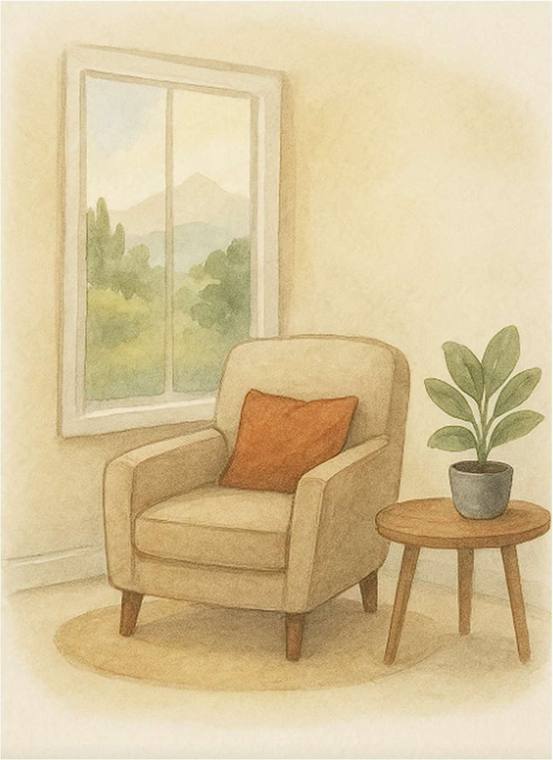
Find Your Comfortable Space
“Comfort is where healing begins.”
Take a moment to pause and find a place, indoors or outdoors, that inspires a sense of calm and comfort. You may even hold a small piece of nature: a stone, a leaf, a shell. Notice how you feel, but there is no need to change anything.
Step 2 of 7
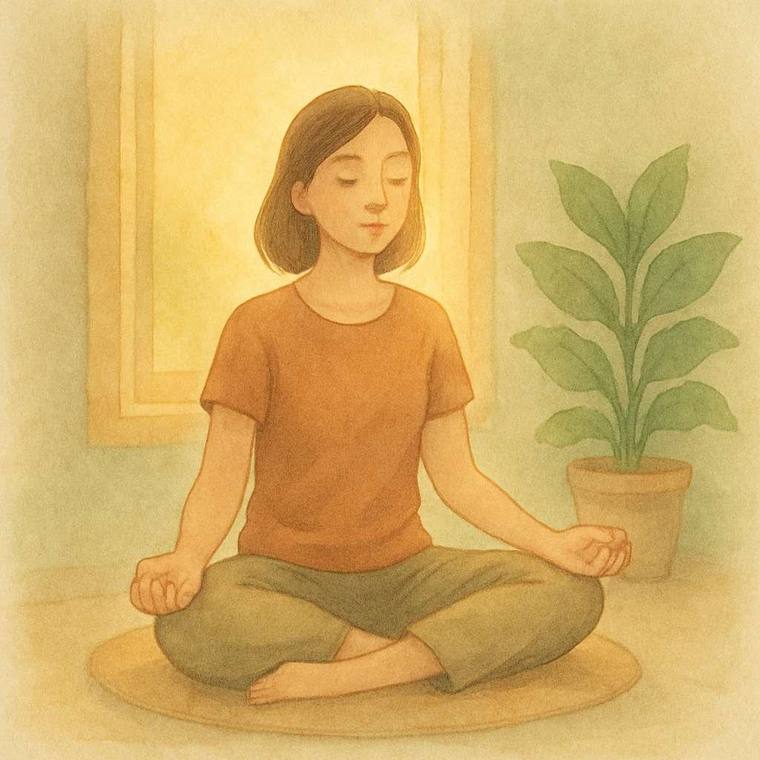
Face the Light
“Let the sun guide you.”
When sitting, face the morning sun, east. This is not just a direction; it stands for new beginnings. Picture the light warming your face, and feel what arises.
Step 3 of 7
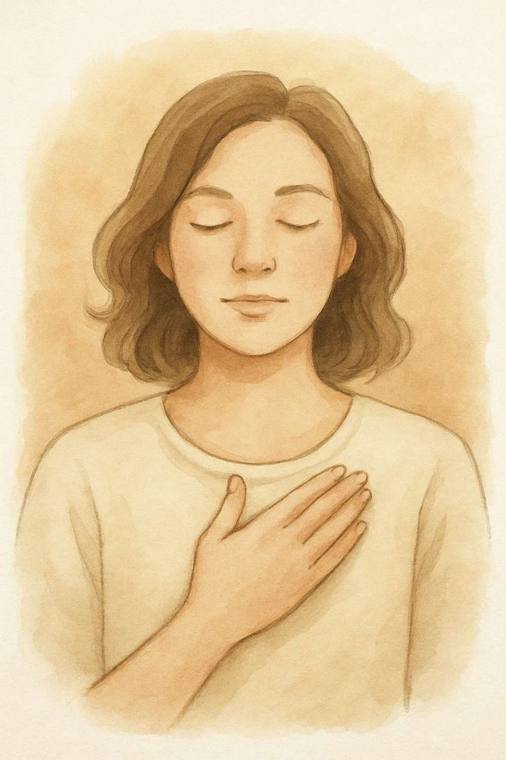
Return to Your Heart
“Come home to your breath.”
Place your hand on your chest and feel your breath. Do not change it, just notice it. Sit like this for about thirty seconds.
30
Step 4 of 7
Breathe in Peace, Breathe out Stress
“Breathe in fresh air; breathe out stress.”
With your hand resting on your chest, notice your breath. Say softly on the inhale, “I know I am breathing in fresh air,” and on the exhale, “I know I am breathing out stress.” Repeat three times.
Inhale: “I know I am breathing in fresh air.”
Exhale: “I know I am breathing out stress.”
Three slow rounds, at your own pace.

Step 5 of 7
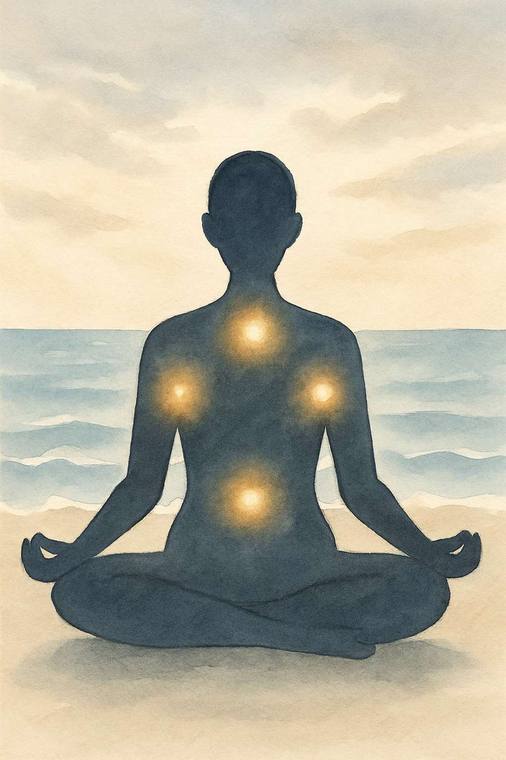
Pause and Feel
“Your body speaks. Listen.”
Scan your body from head to toe. Observe where you feel tension, pressure or pain. Notice how you feel, but there is no need to change anything.
Step 6 of 7
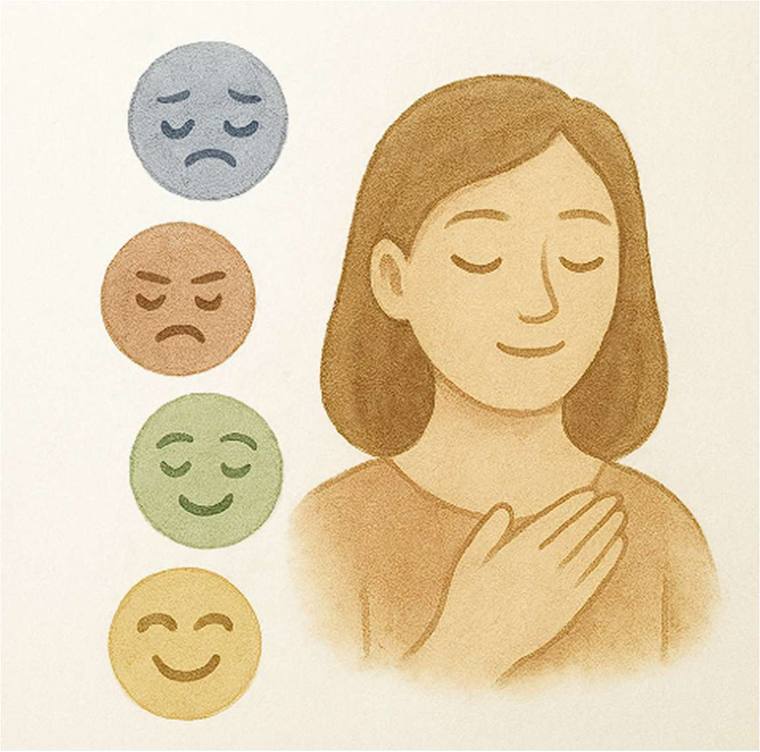
Gently Name What You Feel
“Name it to know it.”
Identify your feelings, thoughts or sensations. Label the emotion without judgment. Ask: what is this emotion trying to tell me? Without the story, what is underneath?
Step 7 of 7
Ground Yourself Through Your Senses
“Your senses ground you in the now.”
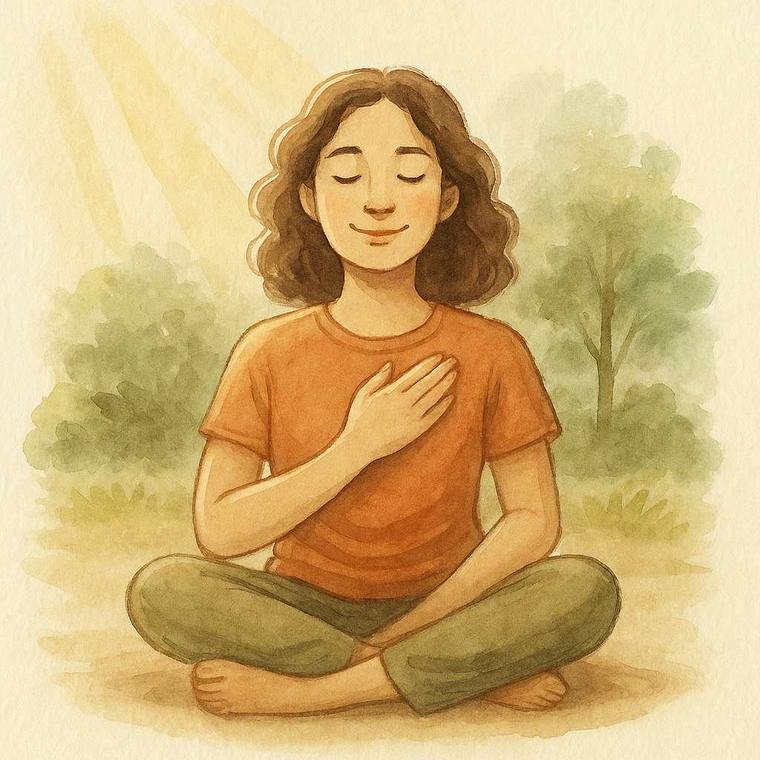
Remain in your spot, hand on your chest, facing east. Notice: what do you see? Hear? Smell? Taste? Touch? Sit with any positive shifts you feel for at least seventeen seconds.
17
Final reflection
Just breathe
You sat back and observed your inner and outer world, not to fix or analyze it, but simply to notice it. Your breath is always with you: your silent guide.
“You are learning to listen.”

Your reflections
Everything you type is stored only in this browser, on this device, using its local storage. It never reaches a server, so it is private, and so it disappears if you clear your browsing data or switch devices. Copy anything you want to keep. How this site handles data.
If the steps are useful and you want to go further, this is the same ground Somatic Experiencing works on, more slowly and with someone alongside you. Therapy at Finding Balance.
Nothing saved yet. Anything you write above appears here.
Questions about the practice
Where do my answers go?
Nowhere. They are saved in your browser's local storage on this device and never transmitted. Reem cannot see them, this site has no analytics, and there is no account to create. The trade-off is that clearing your browsing data deletes them.
Do I have to answer every prompt?
No. Blank is a legitimate answer and getting stuck is part of it. The prompts exist to give attention somewhere to land, not to be completed.
How often should I do this?
Daily if it helps, weekly if that is more realistic, or only when you need to reset. The practice is short on purpose so that doing it is easier than deciding whether to.
What if something difficult comes up?
Stop, and come back to step three: hand on your chest, noticing your breath without changing it. This is a noticing practice, not trauma processing, and it is not a crisis resource. If what surfaced needs more than a page, that is worth taking to a therapist. A consult here is free and fifteen minutes.
How can I learn more?
The frequently asked questions page collects everything that is not specific to one service: fees and insurance, how the methods differ, complex PTSD, what Texas requires of a counselor, and how to start. If the answer is not there either, a free consult is the quickest way to get one.
This practice does not provide emergency care. If you are in immediate danger, call 911. For a mental health crisis, call or text 988 for the Suicide and Crisis Lifeline.
Start with a conversation
Therapy consults are fifteen minutes. Supervision and EMDR consultation consults are thirty. Both are free and commit you to nothing.