
Step 1
Find Your Comfortable Space
“Comfort is where healing begins.”
Pause and find a place, indoors or outdoors, that invites calm. Notice how it feels in your body.
A gentle self-care workbook
7 Easy Steps to Calm and Connection
Slow down and build a relationship with your body, your breath and your inner self. There is nothing here to fix. Notice yourself, be kind to yourself, stay curious. Healing begins when you learn to listen. Written by Reem Glasco, LPC-S, the workbook sets out seven short steps, each paired with watercolor imagery and journal prompts, to be used daily or whenever you need to reset. The workbook and the journal are one volume: you read a step, then write on the pages that follow it.
Each of the seven is the size of a breath, and that is deliberate. It is the same bet the therapy makes: nothing changes by being forced.
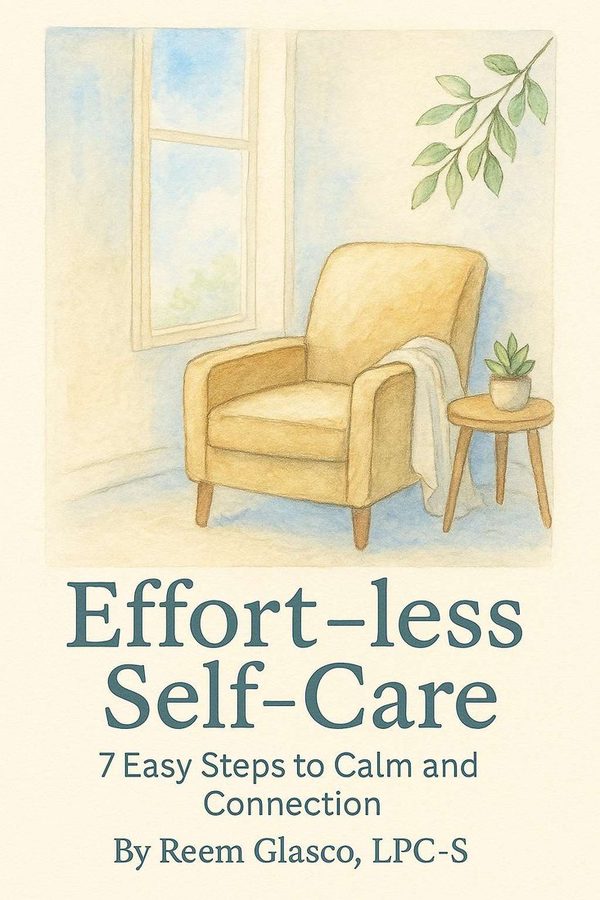
Something to do between sessions that builds the same capacity the work builds, without asking you to process anything alone.
The journal pages are written with clinicians in mind: the people who teach regulation all day and practice it least.
The seven steps are the backbone of the mindful trail retreat, where they are practiced outdoors rather than in a chair.
The full practice runs free on this site, with nothing to buy and nothing to sign up for.
Each step is a small, gentle invitation, paired in the book with soft watercolor imagery and journal prompts to guide your own exploration.
“Comfort is where healing begins.”
Pause and find a place, indoors or outdoors, that invites calm. Notice how it feels in your body.
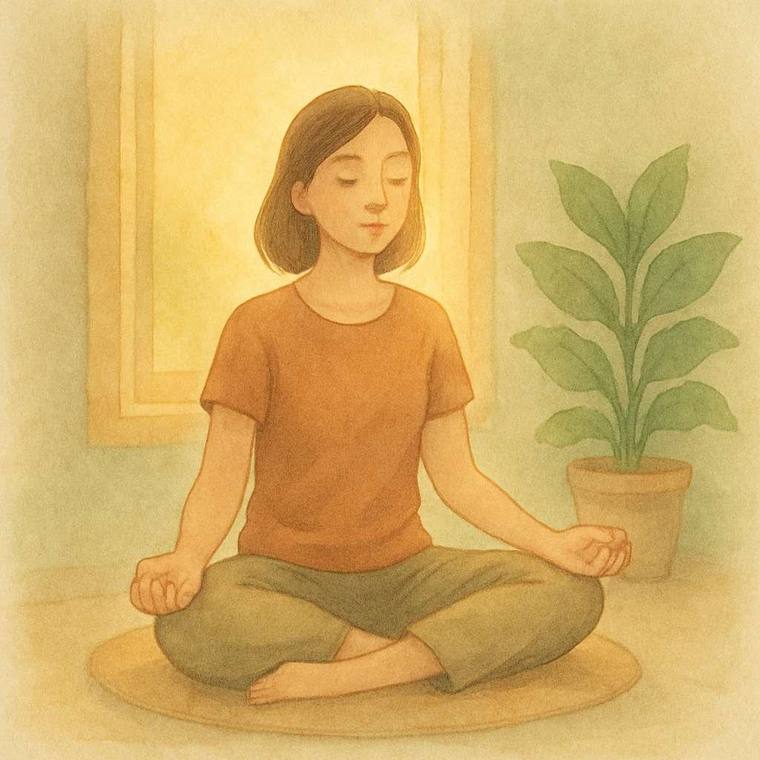
“Let the sun guide you.”
Face the morning sun, east, a symbol of new beginnings. Picture the light warming your face.

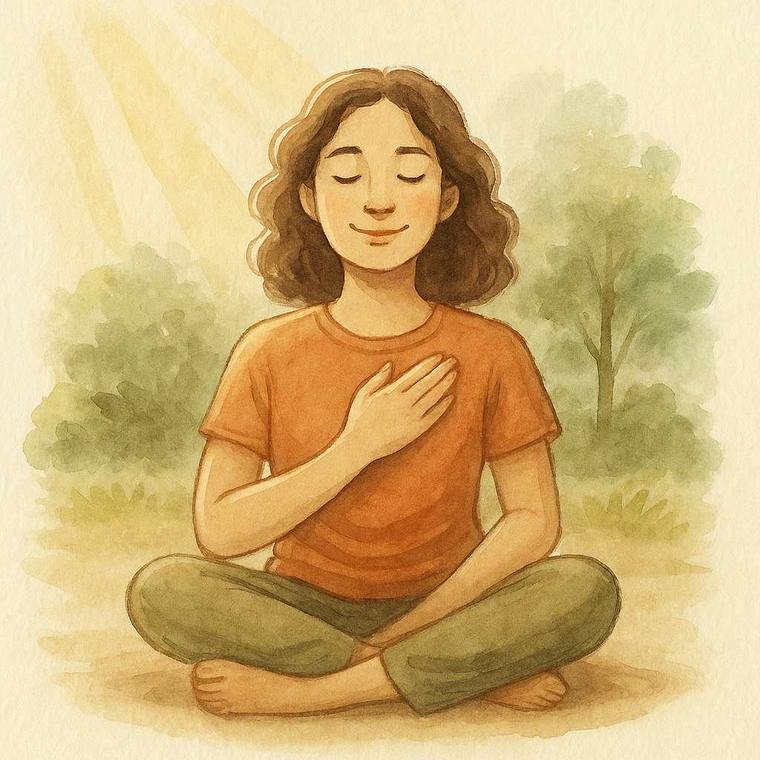
“Come home to your breath.”
Place your hand on your chest and feel your breath. Do not change it, just notice it.

“Breathe in fresh air; breathe out stress.”
Inhale: I am breathing in fresh air. Exhale: I am breathing out stress. Repeat softly three times.
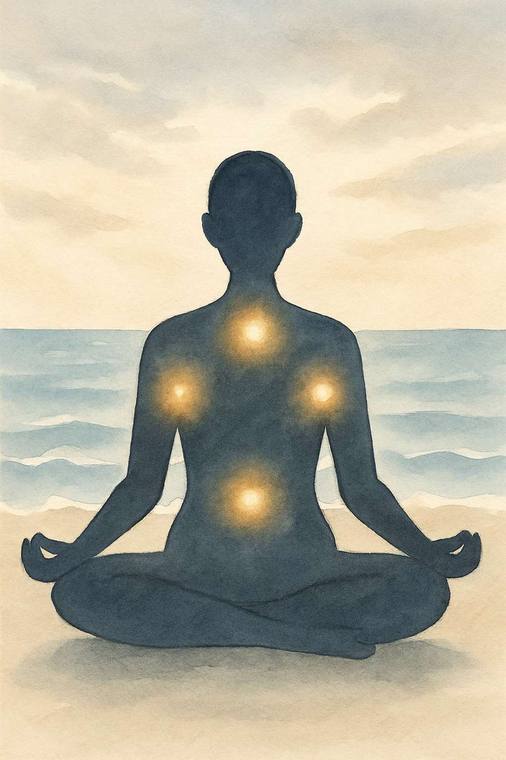
“Your body speaks. Listen.”
Scan from head to toe. Observe where you feel tension, pressure or pain, and what your body is telling you.
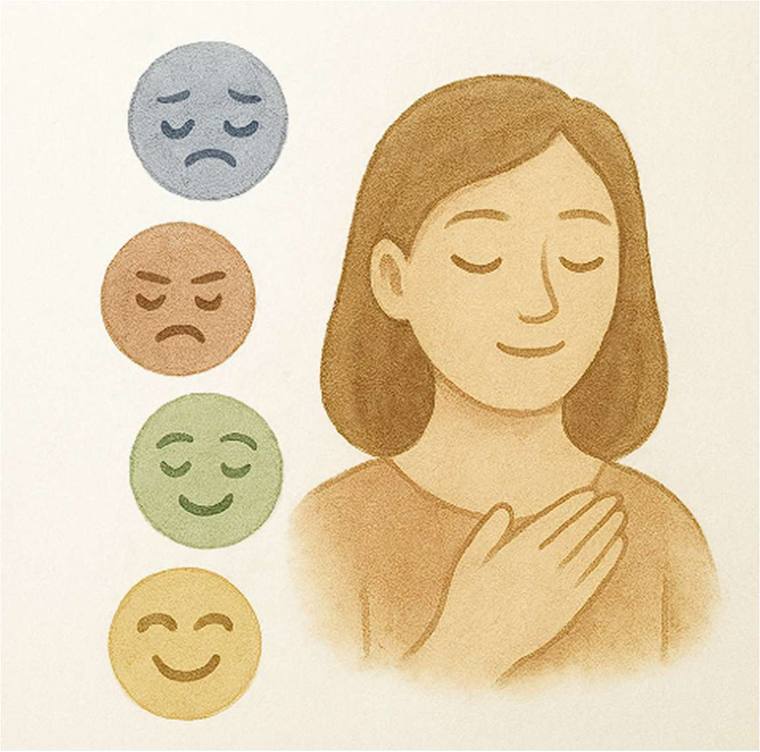
“Name it to know it.”
Label the emotion without judgment. Ask what it is trying to tell you, and what sits underneath the story.
“Your senses ground you in the now.”
Notice what you see, hear, smell, taste and touch. Sit with any positive shift for at least seventeen seconds.
Inside the workbook
“You start the healing process when you learn to listen to your body.”
The workbook shows you how to ground yourself in the present moment, one simple step at a time. Use the seven steps as a daily or weekly practice whenever you need to reset. Getting stuck is fine. Your body resisting is part of the journey. Always remember to breathe.
Every step carries calming imagery to settle you, and gentle prompts to guide you inward. No right answers are required and blank is an acceptable answer.
Spacious pages for keeping up the listening: what you learned, what your body is telling you, and how you found your way back to yourself.
Use the seven steps as a daily card or a simple ritual. Keep it close and return whenever you need to pause and reset.
The same seven steps on this site, with a breathing guide, two short timers and prompts that save privately in your own browser.
About the author
Reem Glasco is a Licensed Professional Counselor Supervisor in Texas who believes self-care should not be one more thing to get right. Her approach is spacious and kind: meet your nervous system where it is, understand what your body is signalling, and learn to pause even in the middle of chaos.
Effort-less Self-Care distils that philosophy into seven approachable steps, so that over time you reset more quickly, settle more deeply, and feel more grounded.
The same lineage runs through her clinical work: NARM, Somatic Experiencing and IFS-informed EMDR, all of which begin with sensation rather than analysis. More about Reem.

$14.95, through Barnes & Noble (opens in a new tab). It is written by Reem Glasco, LPC-S, a Licensed Professional Counselor Supervisor in Texas, and the workbook and journal are one volume.
No. It is one book. The workbook sets out the seven steps and the journal pages follow them, so you read a step and then write on the pages for it. There is nothing else to buy and no second volume to track down.
Yes. The full seven-step practice runs on this site for free, with a breathing guide, the two short timers and all of the journal prompts. Your answers save in your own browser and are never sent anywhere.
A few minutes. Two steps have a built-in pause, thirty seconds with a hand on your chest and seventeen seconds of sensory grounding, and the rest take as long as you want to give them. It is designed to survive a bad morning.
No. It is a daily noticing practice, not treatment, and it is not a crisis resource. If something it surfaces needs more than a journal, that is useful information and a good reason to book a consult.
Not at all. Clients and supervisees come to the practice without ever having seen it. The book exists for the people who want something to do on their own.
The frequently asked questions page collects everything that is not specific to one service: fees and insurance, how the methods differ, complex PTSD, what Texas requires of a counselor, and how to start. If the answer is not there either, a free consult is the quickest way to get one.
This practice does not provide emergency care. If you are in immediate danger, call 911. For a mental health crisis, call or text 988 for the Suicide and Crisis Lifeline.
Therapy consults are fifteen minutes. Supervision and EMDR consultation consults are thirty. Both are free and commit you to nothing.